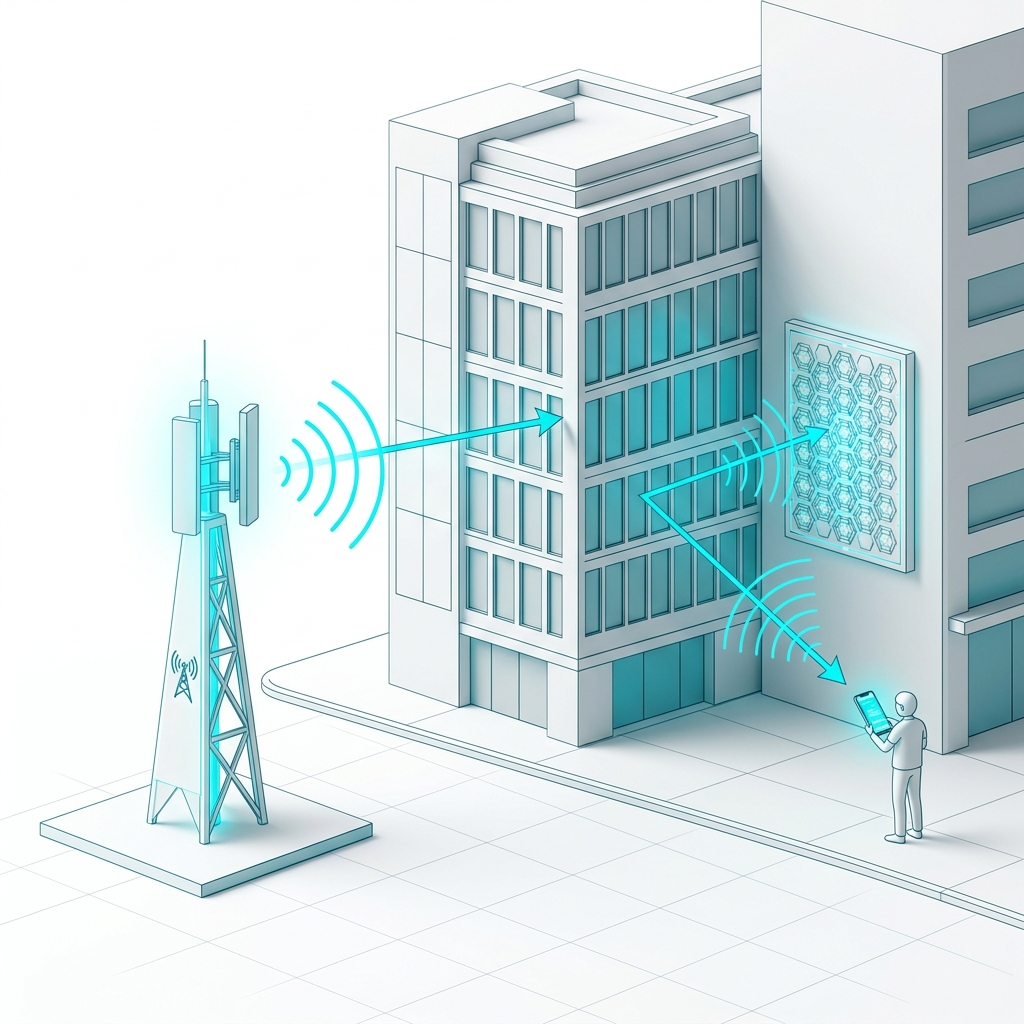
RIS size and ML-enabled beam sweeping paper published at EuCAP 2026
The paper “Impact of RIS Size on Machine Learning-Enabled Beam Sweeping for User Localization” was published at EuCAP 2026. It studies how the physical size of a reconfigurable intelligent surface changes the spatial information captured during beam sweeping and the resulting machine-learning localization performance.
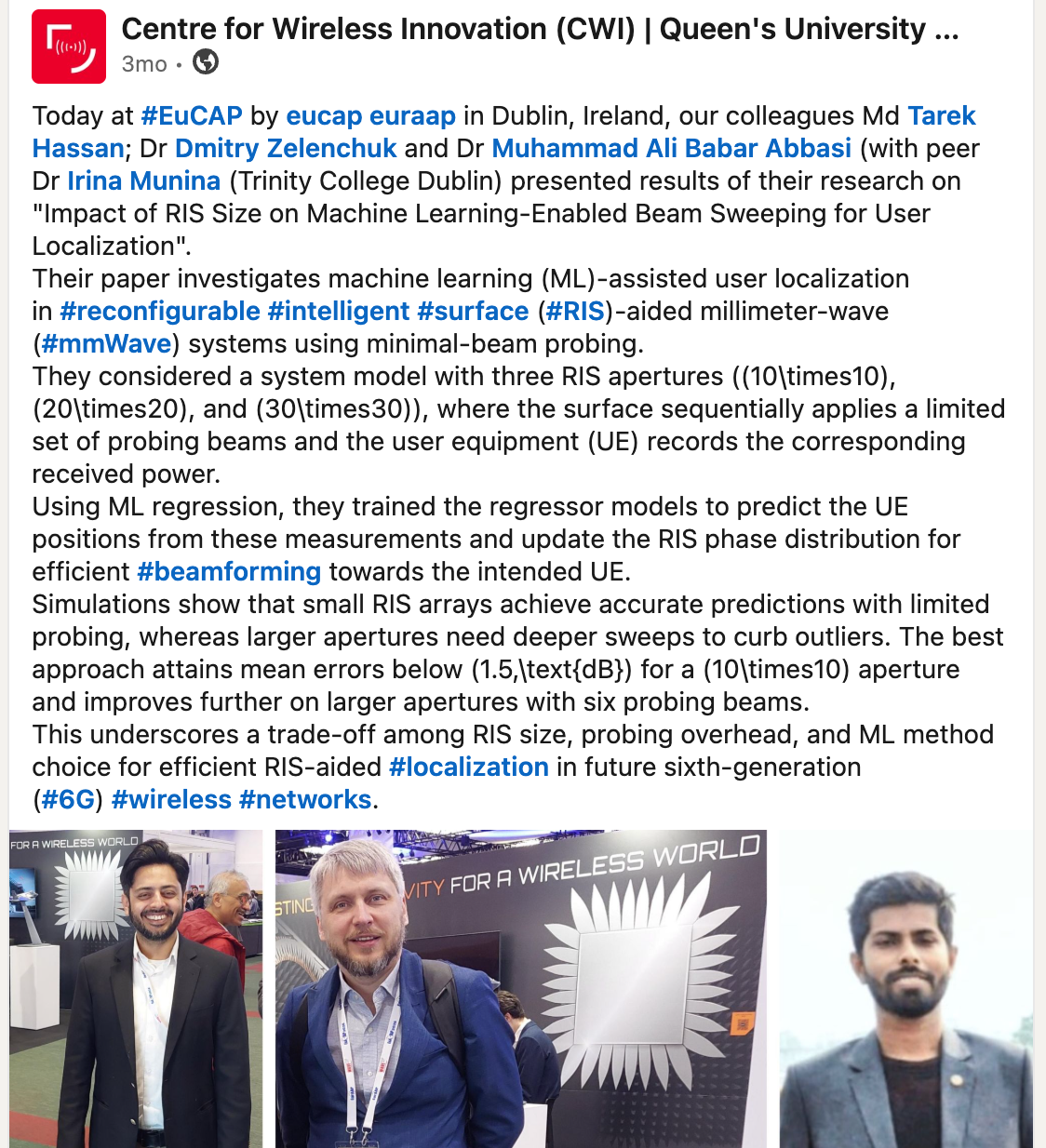
Paper results
- Compared three RIS apertures: 10 × 10, 20 × 20, and 30 × 30 elements.
- The best approach produced mean errors below 1.5 dB for the 10 × 10 aperture.
- Six probing beams improved performance for larger apertures by reducing prediction outliers.
Research experience
The study developed my experience in comparing RIS aperture configurations, interpreting beam-sweeping data, and connecting physical design choices with the performance of a learning-based localization model.
Next work
Future work will examine wider-band, multi-user, and hardware-aware scenarios to understand how RIS size and configuration should be selected for practical localization systems.
Publication citation
M. T. Hassan, D. Zelenchuk, M. A. B. Abbasi, and I. Munina, “Impact of RIS Size on Machine Learning-Enabled Beam Sweeping for User Localization,” in Proc. 20th European Conference on Antennas and Propagation (EuCAP), Dublin, Ireland, 2026.